
Introduction: Why Are More Parents Interested in Abacus for Kids?
Every parent wants their child to feel confident while learning mathematics. However, some children find calculations difficult, lose interest in numbers, or become nervous when asked to solve maths problems. Others understand the concepts but take extra time to complete calculations.
The abacus is a practical learning tool that can make numbers more interesting and interactive for children. Instead of working only with written numbers, children use beads to represent quantities and practise mathematical operations. This hands-on approach can help make abstract numerical ideas easier to explore.
Abacus learning is not simply about calculating quickly. With appropriate teaching and regular practice, children can learn to recognise numbers, understand place value, follow calculation steps and develop confidence in solving problems.
At Smart Wings, we believe that every child deserves an encouraging learning environment where curiosity, practice and gradual progress are valued. In this guide, you will discover what an abacus is, how it works, its potential benefits, the best age to begin and ways parents can support learning at home.
1. What Is an Abacus?
An abacus is a counting and calculation tool made of beads arranged on rods or wires. Each rod represents a place value, such as units, tens or hundreds, depending on the abacus system being taught.
By moving the beads according to specific rules, learners can represent numbers and perform calculations such as addition and subtraction. More advanced lessons may introduce multiplication, division and other numerical operations.
For young children, the abacus provides a visual and physical way to explore mathematics. For example, rather than merely seeing the number 5 written on paper, a child can move five beads and observe the quantity represented by that number. This connection between a physical object and a written number can make early number learning more engaging.
How does abacus learning work?
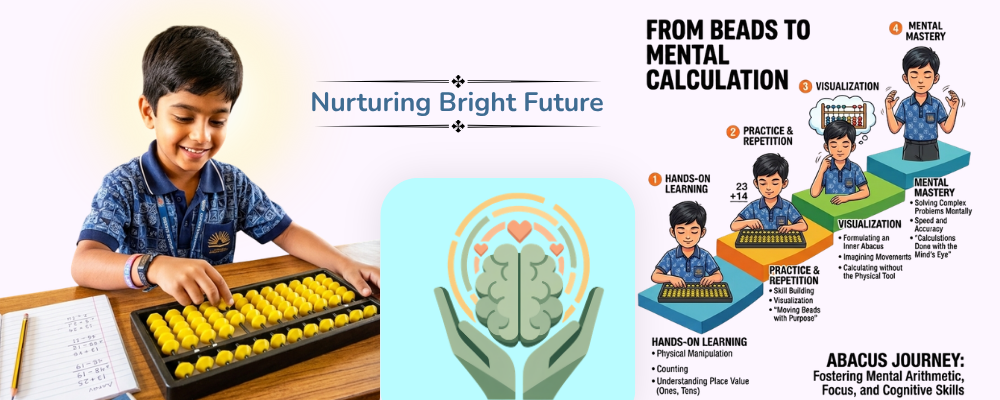
Children generally progress through several stages:
- Understanding numbers: Recognising quantities and learning how beads represent numbers.
- Learning bead movements: Practising the rules for representing different numbers.
- Performing simple calculations: Using the abacus to solve addition and subtraction problems.
- Building accuracy: Repeating calculations while learning to check answers.
- Developing mental calculation skills: With suitable instruction and practice, some learners begin to visualise bead movements and solve selected calculations without physically moving the beads.
The pace of progress varies from child to child. Consistent practice and clear instruction are more valuable than rushing through levels.
What Is the Best Age to Start Abacus Classes?
Many children can begin introductory abacus learning at around 5–7 years of age, depending on their number readiness, attention span and ability to follow instructions. Some children may be ready earlier, while others benefit from waiting until they are more comfortable with basic counting.
There is no single perfect age for every child.
Ages 4–5: Building number readiness
At this stage, children may benefit from playful activities involving counting, sorting, matching and recognising small quantities. If an abacus programme accepts children in this age group, lessons should be short, enjoyable and suited to their developmental level.
The main goal is to build familiarity with numbers rather than expect fast calculations.
Ages 6–8: Learning the foundations
Children in this age group may be ready to learn abacus rules, represent numbers and practise basic addition and subtraction. Short, structured lessons can help them develop a routine and gradually improve accuracy.
Ages 9–12: Developing calculation strategies
Older beginners can also learn abacus. They may be able to connect the lessons with the arithmetic they already study at school and understand the purpose of each operation. Some older learners may progress quickly through introductory concepts, but their pace will still depend on their previous knowledge and practice.
Parent tip: Ask whether a learning centre assesses your child's readiness before recommending a course level. A suitable programme should match the child's current skills rather than rely on age alone.
Seven Potential Benefits of Abacus Learning
Abacus classes can support mathematical practice and several useful learning habits. The results depend on teaching quality, the child’s interest, regular practice and individual needs.
Benefit 1: A clearer understanding of numbers
The beads give children a visual representation of numerical quantities. This can help them connect numbers with amounts and understand how values change when beads are moved.
For example, a child can represent 4, add 3 more beads and observe that the total is 7. This physical demonstration can support the transition from counting objects to working with written numbers.
Benefit 2: Practice in addition and subtraction
Abacus lessons provide repeated opportunities to practise calculation procedures. Children learn to follow a sequence of steps and check whether their answers are correct.
With practice, familiar calculations may become easier and more efficient. However, children should also understand what addition and subtraction mean, not simply memorise bead movements.
Benefit 3: Attention to instructions
During an exercise, children need to listen to instructions, identify the correct rod and move the appropriate beads. These tasks provide opportunities to practise concentration and careful following of steps.
The ability to maintain attention varies by child, so lessons should include suitable breaks, encouragement and activities that are neither too easy nor excessively difficult.
Benefit 4: Accuracy and checking habits
When children solve a calculation, they can learn to pause and verify their work. If an answer is incorrect, a supportive teacher can help them identify the step where the mistake occurred.
This process teaches children that errors are part of learning and that careful checking is a useful habit in mathematics and other subjects.
Benefit 5: Confidence through gradual progress
A child who initially struggles with a calculation may feel encouraged after mastering it through practice. Small achievements—such as representing a number correctly or solving a set of addition problems—can help build a positive attitude towards learning.
Confidence grows most sustainably when adults recognise effort, improvement and persistence rather than speed alone.
Benefit 6: A structured learning routine
Regular abacus practice gives children an opportunity to follow a sequence: understand the task, perform the calculation, check the result and correct mistakes when necessary.
This routine can encourage patience and persistence. These are useful learning habits, although abacus lessons alone cannot guarantee improvements in every area of schoolwork.
Benefit 7: An introduction to mental calculation
Some abacus programmes gradually teach children to imagine an abacus and mentally represent bead movements. With continued practice, learners may become more comfortable completing certain calculations without the physical tool. Mental calculation is a skill that develops through instruction and practice. Children should not be pressured to visualise an abacus before they are ready.
Important for parents: Abacus learning may support calculation skills, but it should not be treated as a guaranteed way to increase IQ or improve every cognitive ability. Children still need a broad education, physical activity, play, sleep and opportunities to learn mathematics in different ways.
What Do Children Learn in an Abacus Course?
A well-structured course should progress from basic concepts to more challenging calculations.
Stage 1: Familiarisation and number concepts
Children learn the parts of the abacus, basic bead movements and the relationship between rods and place values. They practise representing numbers accurately.
Stage 2: Basic addition and subtraction
Learners begin with suitable problems and gradually practise more complex combinations. Teachers should ensure that children understand the steps before increasing the difficulty.
Stage 3: More advanced calculations
As learners become comfortable with the foundations, lessons may introduce larger numbers, longer calculations and additional operations according to the course curriculum.
Stage 4: Mental abacus practice
At an appropriate level, children may be introduced to visualising bead movements and practising mental calculations.
Stage 5: Review and progress assessment
Regular revision helps children retain previously learned skills. Short assessments can identify areas that need more practice and help teachers plan the next stage.
Course levels, lesson frequency and duration differ between centres. Ask for the actual curriculum and expected practice time before enrolling your child.
How Can Parents Help Children Practise Abacus at Home?
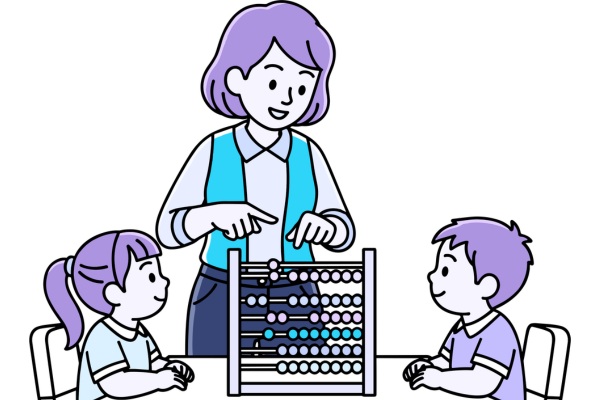
Parents do not need to be expert abacus instructors to support learning. A calm environment, encouragement and a consistent routine can make a difference.
Tip 1: Establish a manageable practice routine
Choose a regular time when your child is reasonably alert. Begin with a short session appropriate to the child’s age and assigned work. Increase the duration only if the child can remain engaged without becoming frustrated.
Follow the practice schedule recommended by the teacher rather than forcing long sessions.
Tip 2: Focus on accuracy before speed
It is tempting to celebrate a child who finishes first. However, correct understanding should come before faster calculation. Encourage your child to explain the steps and check the answer. Speed can develop gradually as the methods become familiar.
Tip 3: Make number activities part of everyday life
You can use simple daily situations to discuss quantities. Ask your child to count a small group of objects, compare two quantities or work out how many items remain after some are removed.
These activities should complement the formal lessons, not replace the specific abacus methods taught by the instructor.
Tip 4: Avoid comparing children
Children learn at different speeds. Comparing your child with a sibling, friend or classmate may create unnecessary pressure.
Instead, compare the child’s current performance with their own earlier progress. Completing a task more accurately than last week is worth recognising.
Tip 5: Communicate with the instructor
If your child repeatedly makes the same mistake, ask the teacher which concept needs revision. Practising the correct step is more useful than repeatedly completing exercises without understanding the error.
Tip 6: Celebrate effort and persistence
Praise your child for careful work, asking questions, correcting mistakes and continuing after a difficult problem. These behaviours help establish a healthier relationship with learning.
Can Abacus Replace School Mathematics?
No. Abacus classes should complement school mathematics rather than replace it.
School mathematics covers many areas, including number concepts, arithmetic, geometry, measurement, patterns, reasoning and problem-solving. An abacus programme generally focuses on calculation techniques and related practice.
Children also need to understand why mathematical methods work and how to apply them to word problems and real-life situations.
Parents can support both forms of learning by asking questions such as:
- What does this number represent?
- How did you arrive at that answer?
- Can you solve the problem another way?
- How could you check your result?
The goal is not only to produce an answer quickly but also to help the child understand and use mathematics confidently.
How to Choose the Right Abacus Class for Your Child
Before enrolling, consider the following points.
Teaching approach: Does the instructor explain concepts clearly and adapt to different learning speeds?
Suitable class level: Is there an assessment or introductory session to understand the child’s readiness?
Practice materials: Are the abacus and worksheets appropriate for the child’s level?
Progress updates: Does the centre explain what the child is learning and where additional practice may be needed?
Class environment: Are children encouraged to ask questions and learn from mistakes?
Reasonable expectations: Does the centre avoid unrealistic promises about IQ, academic results or guaranteed calculation speed?
Parent communication: Can you ask questions about homework, attendance, progress and the next course level? A good learning environment should encourage curiosity, steady progress and a positive attitude towards mathematics.
Frequently Asked Questions
Many children enjoy learning with a hands-on tool, but interests and learning preferences differ. An introductory session can help you determine whether the teaching approach suits your child.
There is no universal timeline. Progress depends on the curriculum, lesson frequency, practice, attendance and the child’s starting level. Ask the centre for its course structure and assessment process.
Regular practice can help learners become more fluent with the calculations they practise. However, results vary, and calculation speed should not be confused with complete mathematical understanding.
Follow the instructor’s guidance. Short, regular practice is often easier to maintain than occasional lengthy sessions. The routine should remain appropriate for your child’s age and workload.
Yes. Older beginners can learn abacus if the course matches their needs. A teacher can recommend a suitable starting level after assessing their existing number skills.
Conclusion: Help Your Child Build Confidence with Numbers
Abacus learning offers children a practical way to explore numbers, practise calculations and develop a more structured approach to mathematical tasks. Its value lies in clear instruction, regular practice and an encouraging environment—not in promises of instant results.
As a parent, you can support your child's progress by celebrating small achievements, making number activities enjoyable and communicating with the instructor when challenges arise.
At Smart Wings, our aim is to make skill development engaging and accessible for children through structured learning and age-appropriate activities.
Would you like to explore abacus learning for your child? Contact Smart Wings to enquire about our Abacus course, suitable age groups, class schedules and enrolment process.
Smart Wings — Nurturing Bright Future